
Hairy Feet, Red Eyes, Three Lips: Meet the Salish Sea's Newest Sea Spiders
October 6, 2026

If you’re so afraid of spiders that you would jump to the depths of the ocean to avoid them, you may want to rethink that plan. The sea has spiders, too. Thanks to a new study published in the journal Organisms Diversity & Evolution, we’re learning more about two new species.
The newly named sea spiders expand our understanding of a group of animals with more than 1,400 species. They were first found by scuba divers in the Salish Sea off Canada’s western coast in 2023 and 2024. The marine arthropods aren’t true spiders. But they have a lot in common with arachnids. They have eight legs. They have closely grouped eyes. And they feast on the fluids of fellow invertebrates.
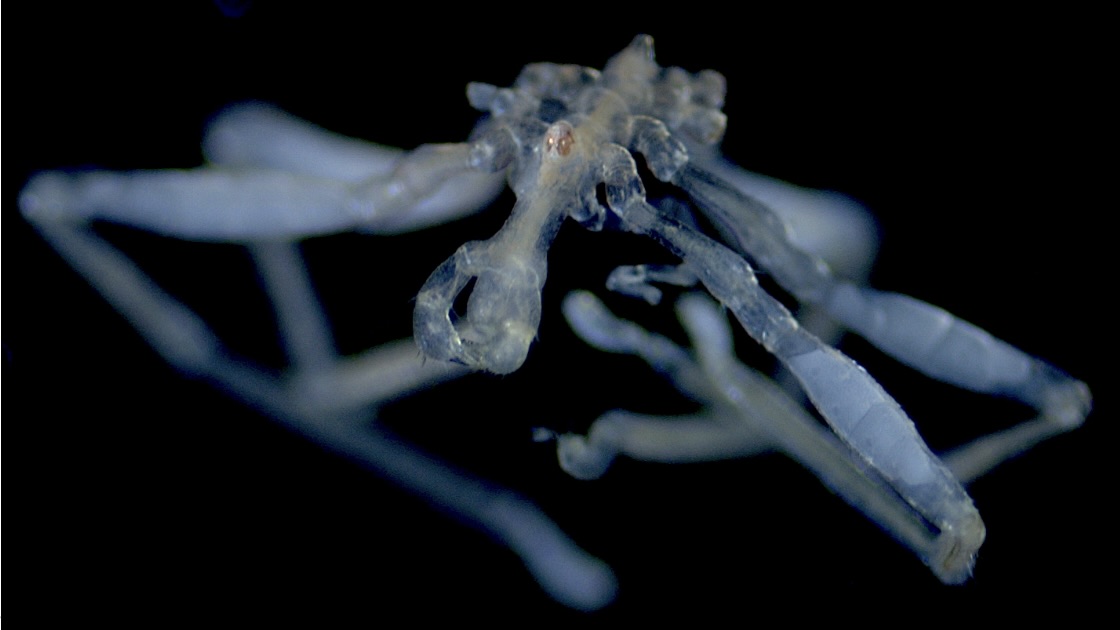
The two species are the first new sea spiders discovered in the Salish Sea in nearly a hundred years. One of them is named for its long, spine-covered lower legs. It's called Callipallene pilosuspedes. It boasts red eyes, claws for grasping food, and a triangle-shaped mouth with three lips.
The other species is named after an ancient Indigenous village near where the sea spider was first found. It's called Tanystylum kiixin. It is parasitic. That means it clings to and feeds on larger animals. The T. kiixin spiders were also covered with their own tiny parasites. Lead study author Cormac Toler-Scott called it an "ecosystem within an ecosystem."
Toler-Scott says learning about new sea spider species is part of the key work of protecting life in the Salish Sea.
In a University of British Columbia press release, he noted that his work can help experts understand how to better protect the ecosystem.
Reflect: What is a fear you have that you think might change if you learned more about it?
Photo of Callipallene pilosuspedes from UBC press release.
News brought to you by 
Read More News Stories Today!