
Today's Trash is Tomorrow's Problem
Provided by: Children's Environmental Literacy Foundation|Published on: May 24, 2024|Last updated: July 16, 2026
Grades: 3-12
Type: Activity - Classroom
Subjects: Biology, Earth and Space Sciences
Authors: Children's Environmental Literacy Foundation
Location: Earth, North America > United States > Texas
This resource has been reviewed by SubjectToClimate's climate scientists and verified for scientific accuracy and up-to-date information. Learn about our review process →
This resource has been reviewed by SubjectToClimate's climate scientists and verified for scientific accuracy and up-to-date information. Learn about our review process →
Synopsis
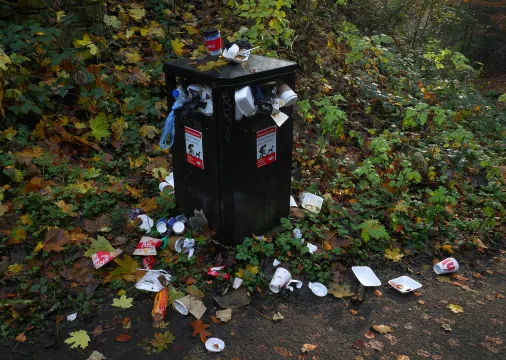
- In this activity, students will learn what happens to plastic waste after they throw it away and why it is a huge problem for people and the planet.
- Students will collect plastic items from their backpacks, watch a short video about the plastic life cycle, read how a plastic bottle travels from Houston to the Gulf of Mexico, and discuss how they can reduce plastic waste.
Teaching Materials
Positives
- This activity helps students differentiate between single-use plastics and multi-use plastics.
- The video helps students see how the production of plastic is harmful to the environment and society.
Additional Prerequisites
- The video is 4 minutes and 16 seconds long.
- For the "Journey of a Plastic Bottle" story, teachers should click the "Slideshow" button in order to get the full effect.
- To read the explainer for background information, readers must enter their email.
Differentiation
- Before participating in this activity, students can research the Great Pacific Garbage Patch.
- This activity can fit within a larger unit on waste management in the United States, how it has changed over the years, and why waste management is an important environmental issue.
- After viewing the "Journey of a Plastic Bottle" story, students can take a walk and safely collect litter in their environment.
- The animated video can enhance a lesson on environmental racism in the United States.
- After students learn about incineration's environmental impacts, they can research the effect of poor air quality on health.
This activity informs students about plastic pollution and tasks them with understanding the lifecycle of plastics in their lives. Several excellent sources are linked, notably a Google Earth slideshow that tracks a discarded bottle from a Houston park to the Gulf of Mexico. The resource is well-sourced, and effective recycling is stressed. This resource is recommended for teaching.
Teaching Tips
Standards
Resource Type and Format
Scientist Reviewed
This resource has been reviewed by SubjectToClimate's climate scientists and verified for scientific accuracy and up-to-date information. Our review process ensures that every resource in our library reflects the current state of climate science.
Learn about our review process →