
Mussel Bed Mapping
Provided by: Gulf of Maine Research Institute|Published on: June 25, 2026|Last updated: July 16, 2026
Grades: 6-AP
Type: Activity - Outdoors
Subjects: Biology, Geography
Authors: Gulf of Maine Research Institute
Location: North America > United States, North America > United States > Maine, North America > United States > Massachusetts, North America > United States > New Hampshire

This resource has been reviewed by SubjectToClimate's climate scientists and verified for scientific accuracy and up-to-date information. Learn about our review process →
This resource has been reviewed by SubjectToClimate's climate scientists and verified for scientific accuracy and up-to-date information. Learn about our review process →
Synopsis
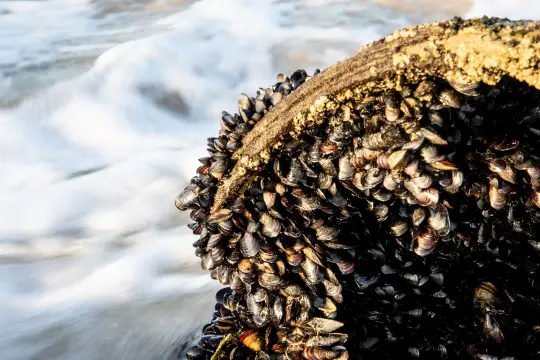
- This community science project invites participants to help locate mussel beds along the coast and submit photos and observations.
- Students learn how mussel beds have been shifting into deeper water, making them harder to find, and discover that their observations will help scientists know where to look for follow-up data collection.
Teaching Materials
Preparation:
- Participants must create a free account at home before contributing observations.
- Data collection should be scheduled within one hour of a low or negative tide, so use local tide charts and the provided low tides guide to ensure optimal conditions for observation.
- Ensure students are clear on key safety procedures and rules while on-site by the coast, and consider whether lifeguard presence is required.
- Provide families with a dress code (e.g., water shoes, shorts) and list of what to bring (e.g., sunscreen, towel) for the excursion.
Classroom Implementation:
- This is a field-based, hands-on activity best done in small groups at a safe coastal site.
- Before going out, have students study the provided mussel identification guide and the mapping protocol.
- Have students predict where they expect to find mussels; after the field activity, have them compare predictions with what they observed and with the shared data set.
- Have students analyze the shared observation data for patterns by region, habitat type, or season, then construct an evidence-based argument about where mussels are thriving and where populations may be shifting.
- Facilitate a discussion about the importance of mussels to the region's culture, environment, and economy.
This research project focuses on observing and learning about where mussel beds have been moving to. The webpage includes information about the project, current data, and how people can contribute by finding and observing mussel beds in their area. The project and website are a great example for students about what a research project entails. The information presented is accurate, and this resource is recommended for teaching.
Teaching Tips
Standards
Resource Type and Format
Scientist Reviewed
This resource has been reviewed by SubjectToClimate's climate scientists and verified for scientific accuracy and up-to-date information. Our review process ensures that every resource in our library reflects the current state of climate science.
Learn about our review process →