
Improve Nonmotorized Transportation
Grades: 9, 10, 11, 12, AP
Type: Scientific Reports
Subjects: Earth and Space Sciences, Engineering
Authors: Project Drawdown
Location: Earth
This resource has been reviewed by SubjectToClimate's climate scientists and verified for scientific accuracy and up-to-date information. Learn about our review process →
This resource has been reviewed by SubjectToClimate's climate scientists and verified for scientific accuracy and up-to-date information. Learn about our review process →
Synopsis
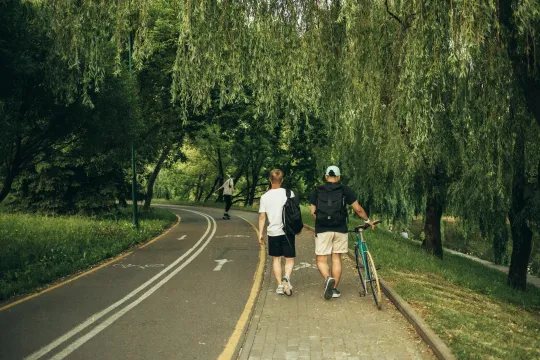
- This article from Project Drawdown analyzes the increased use of nonmotorized transportation, such as walking, personal bicycles, and shared bicycles, as a climate solution.
- Students will understand how this solution can reduce greenhouse gas emissions while providing additional benefits and how things like infrastructure and proximity to services influence the solution's implementation.
Teaching Materials
Positives
- This solution is great for high school students to explore as they begin to make their own transportation decisions.
- When students hover over the highlighted vocabulary terms, a definition pops up, making it easy for students to quickly define new or unknown words.
Prerequisites
- Students will benefit from understanding the relationship between climate change, carbon emissions, and fossil fuel use.
Differentiation & Implementation
- After reading this article, students may enjoy viewing this video as a practical example of this solution in action or this video on a system of bicycle-only roads in the Netherlands.
- Students can take their own data by surveying other students in the school to ask what nonmotorized mode of transportation they are most likely to take. Then, students can use this data to propose infrastructure to support this mode in their town, such as more bike lanes or sidewalks.
- Students can check out other suggestions like this one using the Project Drawdown Explorer. Students can compare other transportation sector solutions, such as carpooling.
- After reading, students can debate whether assessments of this solution should factor in the emissions from food that pedestrians and bicyclists consume to fuel their transportation, as briefly discussed in the article.
This resource analyzes improvements to nonmotorized transportation, namely walking and cycling, as a strategy to reduce greenhouse gas emissions. The text is highly detailed, accompanied by several clear figures, and features a clear discussion of benefits and tradeoffs. The resource is exceptionally well-sourced, with numerous peer-reviewed sources cited. This resource is strongly grounded in climate science and is recommended for teaching.
Teaching Tips
Standards
Resource Type and Format
Scientist Reviewed
This resource has been reviewed by SubjectToClimate's climate scientists and verified for scientific accuracy and up-to-date information. Our review process ensures that every resource in our library reflects the current state of climate science.
Learn about our review process →