
How Nature Makes Clean Water
Provided by: The Nature Conservancy|Published on: September 29, 2025|Last updated: July 16, 2026
Grades: 3, 4, 5, 6, 7, 8
Type: Videos
Subjects: Earth and Space Sciences
Authors: Nature Lab by The Nature Conservancy
Location: Earth

This resource has been reviewed by SubjectToClimate's climate scientists and verified for scientific accuracy and up-to-date information. Learn about our review process →
This resource has been reviewed by SubjectToClimate's climate scientists and verified for scientific accuracy and up-to-date information. Learn about our review process →
Synopsis
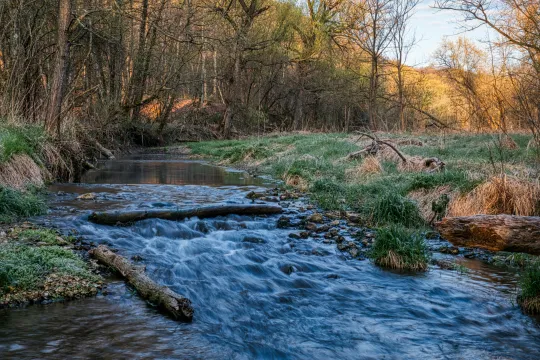
- In this video from Nature Lab by The Nature Conservancy, students will learn about rain gardens and how plants and soil in watersheds filter pollutants out of the water and manage the flow of water through the watershed.
- The video discusses how pavement and other impermeable surfaces can cause flash flooding, stream and rivier bank erosion, and lead to an overflow in wastewater treatment facilities.
Teaching Materials
Positives
- This video is brief and can be watched and discussed within one class period.
- The ease and simplicity of the rain garden solution gives viewers hope.
Prerequisites
- Students should be familiar with water pollutants and the importance of water for all living things.
- It may also benefit students to understand that freshwater is a limited resource.
- This video is a part of this lesson plan by Nature Lab.
Differentiation & Implementation
- After watching the video, students can research and design a rain garden for their homes or school grounds using native plants that work well in a rain garden. This resource may be helpful for implementing this activity.
- Teachers can use this resource to make connections to UN Sustainable Development Goal 6, Clean Water and Sanitation.
- To demonstrate how nature filters the water, teachers can present students with an engineering challenge where they are asked to design a water filter with natural materials, like sand, rocks, and other materials. The bases for these filters can easily be designed with recycled soda bottles. Students can test and iterate their designs to create the best filter.
- To make connections to climate change and ecology, teachers can explain that heavier rains or more rain at one time may become more common as a result of climate change. Teachers can also go through some of the co-benefits of rain gardens, such as increased biodiversity.
In this video, viewers learn about watersheds, how water is cleaned in nature, and the importance of having clean water and a healthy watershed. The host does not mention climate change directly, but does talk about how sudden heavy rains pose a problem for humans and the watershed. These extreme events are more common because of the changing climate. Finally, the video encourages viewers to take action to help their watershed. The information presented is accurate, and this resource is recommended for teaching.
Teaching Tips
Standards
Resource Type and Format
Scientist Reviewed
This resource has been reviewed by SubjectToClimate's climate scientists and verified for scientific accuracy and up-to-date information. Our review process ensures that every resource in our library reflects the current state of climate science.
Learn about our review process →