
Coastal Resilience and Restorative Aquaculture
Provided by: The Nature Conservancy|Published on: May 26, 2023|Last updated: July 16, 2026
Grades: 7, 8, 9, 10, 11, 12
Type: Videos
Subjects: Biology, Earth and Space Sciences
Authors: The Nature Conservancy
Location: Earth

This resource has been reviewed by SubjectToClimate's climate scientists and verified for scientific accuracy and up-to-date information. Learn about our review process →
This resource has been reviewed by SubjectToClimate's climate scientists and verified for scientific accuracy and up-to-date information. Learn about our review process →
Synopsis
- This video describes coastal restoration practices and aquaculture projects led by the Nature Conservancy that hope to protect the world's oceans.
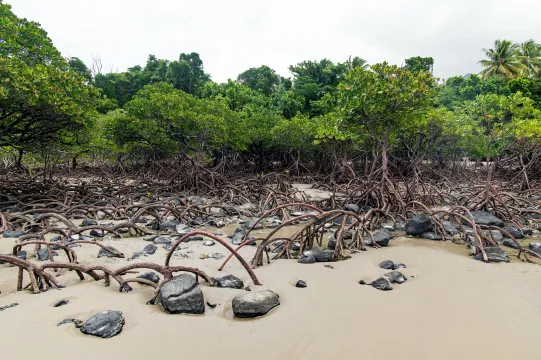
- The video details specific practices such as mangrove planting, seagrass planting, shellfish restoration, and other coastal stabilization practices that can build resiliency to the effects of climate change.
- The video ends with actions steps individuals can take to support oceans, such as eating sustainable seafood, reducing plastic use, and shrinking your carbon footprint.
Teaching Materials
Positives
- The video describes how data analysis and mapping tools are used to identify regions that are in most need of restoration and identify areas that would be most amenable to specific restoration practices.
- This comprehensive video is an excellent summary of the major ecological issues that the ocean faces and provides examples of effective solutions to some of the problems it presents.
- Some ecological vocabulary is presented in text on the screen to assist in comprehension.
Additional Prerequisites
- Learners should have a basic understanding of the causes and effects of climate change before watching this video.
- It would be helpful for learners to have a basic understanding of the following ecological terms and principles: erosion, carbon sequestration, coastal stabilization, and carbon footprint.
Differentiation
- This video is a dense overview of ocean ecology, but only goes into depth explaining a few of the concepts presented.
- It may be helpful to utilize at least one class period reviewing the threats to the ocean presented in this video before diving into the restoration and aquaculture topics.
- It would be helpful to stop the video after each restoration technique is presented to discuss its methods, effectiveness, and feasibility in different regions.
- Have students choose one of the restoration practices introduced and research it further to share with the class.
- A great conservation action extension activity could be to encourage students to create meal plans using sustainable aquaculture items instead of other meats to reduce their usual carbon footprint.
This ~20 minute video from The Nature Conservatory discusses the importance of keeping the the coastlines and oceans clean. There is discussion about aquaculture and the benefits of this sustainable and green industry. This video would be a great resource to a classroom discussing climate change and its effects on the coastlines and oceans, and is recommended for teaching.
Teaching Tips
Standards
Resource Type and Format
Scientist Reviewed
This resource has been reviewed by SubjectToClimate's climate scientists and verified for scientific accuracy and up-to-date information. Our review process ensures that every resource in our library reflects the current state of climate science.
Learn about our review process →